Why don't executives execute?
A case against executives that do nothing.


In March 2020, about 3 years ago from now, a tweet from founder/investor Andrew Wilkinson had reached relative virality on Twitter.
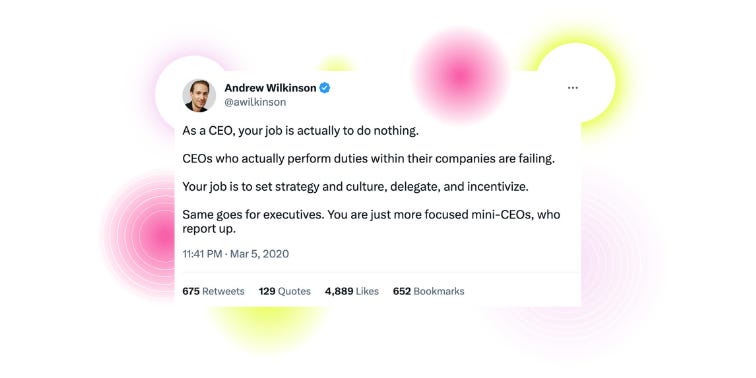
What follows in this article will be my very proletarian (and possibly not even closely viral) argument against the sentiment of CEOs doing nothing. I believe that being hands-on with the aspects of the product or service that you manage brings value not only to yourself as an executive, but also to your organization and work. However, before diving into the reasons why, I'd like to elaborate on why this matters to me and why it should matter to you
To convey my sentiment I’d like you to draw a picture in your mind.
Imagine me and my friends, all in our twenties, chatting (complaining) about our jobs over a cup of overpriced coffee (or cocktails, depending on the time of day you imagine).
😡 One of my friends tells us about how he nearly yelled at his Chief Product Officer for not understanding how to use Google Sheets properly. It was about a basic function of counting data in a spreadsheet. Thankfully, the CPO was open-minded enough to resolve the situation, and even apologized by saying: "Sorry, it's been a while since I've had to fill out a spreadsheet. Usually, I just read them."
😐 Another friend in the group shares their frustration with the executives in her office who have meetings that can last up to 4 hours. Initially feeling left out, she ask to be included. But that dissapoints her even more. Seeing that no one is taking notes during the meeting, she volunteers to do so. However, she soon gives up after realizing there is no agenda and the conversation keeps drifting, making it impossible for any of the topics discussed to turn into actionable items.
😮💨 Another friend chimes in, saying that sometimes it's luckier to be excluded. He complains about his CEO who delegates her managerial role onto the team. "This could be empowering," he explains, "if we weren't already overwhelmed and short-staffed." According to him, the behind her narrative of empowering her team, the CEO's true goal is to delegate management so, like a self cleaning oven, her business can function with little effort from her. So what does she do as a CEO? Well, she claims to be a visionary who strategizes on how things should be done rather than actually doing them.
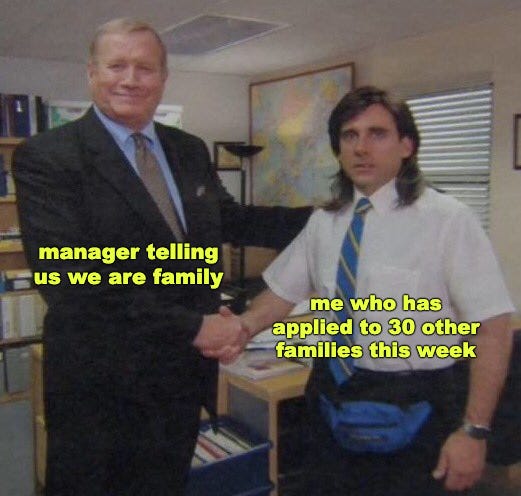
I think you know where I’m going with this: We’ve had enough of so-called visionaries who spend their time strategizing and building culture while paying their team/"family" less than what they spend on one of those five-star dinners with other CEOs for work meetings. It's time for leaders who are not only invested in the vision and culture, but who are also willing to roll up their sleeves and do the work alongside their team, showing a genuine commitment to their success.
CEOs are out of this planet.
Now, I do not want this to be misunderstood, because if you’ve ever worked with me, you know I am a staunch supporter of SYSTEMS. I practice and preach that every team should dedicate a few hours or a few days, depending on their size, to build, review, and maintain the systems that automate and align their work. However, I acknowledge that not everyone may share the same enthusiasm for this approach. Perhaps they do not see their long-term future in the organization, and therefore do not prioritize long-term productivity. Or maybe they simply do not see the immediate value in it, as the impacts may not be apparent right away.
Building and maintaining systems within a team is more than just another item on the task list. It is the way to avoid many meaningless tasks in the future.
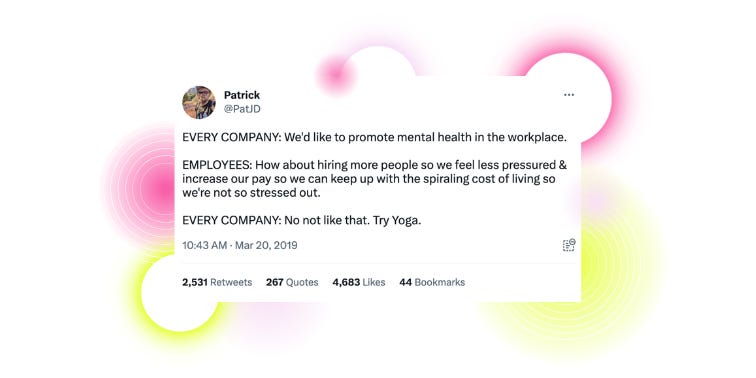
In my opinion, the true indicator of a strong and effective organizational culture is not the company BBQs or monthly Yoga sessions. Rather, it is the integration and internalization of the systems in place. While some may not see the value in doing so, I believe that every team should take the time to build, review, and maintain their systems to automate and align their work. These organizational systems can streamline task management, communication and decision-making, lowering the futur workload. In a fair work environment, not only all team members should have the opportunity to participate equally and freely in these systems, as well as suggest improvements and changes.
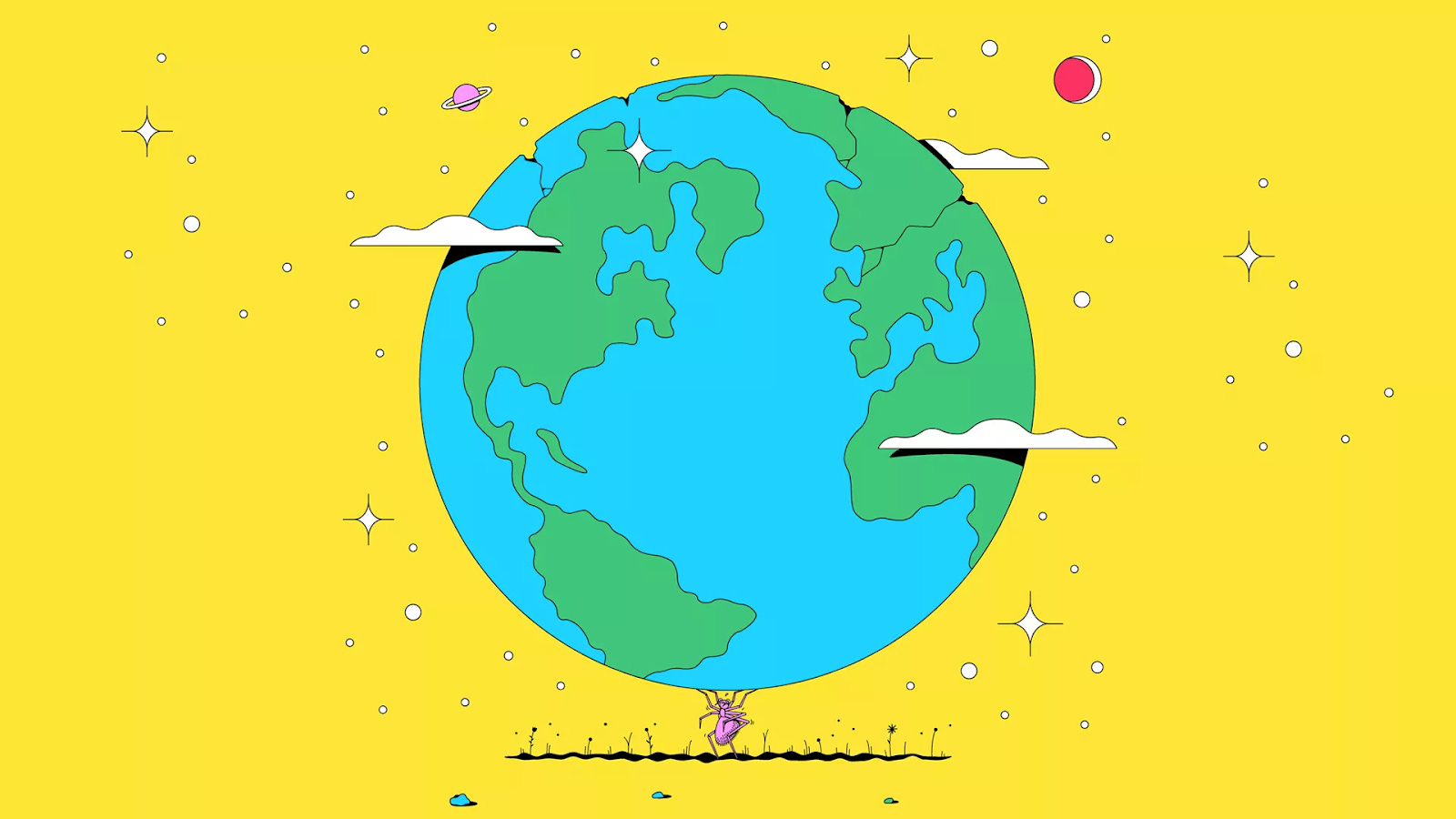
Good work is teamwork. And what better example of impeccable teamwork than what happens on our planet Earth. With thousands of living organisms coexisting, Gaia is a prime example of complex, interdependent systems that require equal respect and participation of those involved. What disrupts the systems, and thus threatens all life, is the humankind’s tendency to see themselves above these systems and above the team. We think we are the sole owners of the responsibility and the privilege to oversee the natural flow of systems on Earth.
No species or organism on Earth has sole executive control and responsibility for Earth's systems. And if you don't take my word for it, maybe you'll take the word of the distinguished environmentalist James Lovelock, who originated the Gaia theory. The theory proposes that all organisms and their surroundings unite and integrate to form a complex and self-regulated system. And if that's not enough, maybe you'll take the word of a thousand scientists who have signed the Declaration of Amsterdam, which starts by saying: "The Earth System behaves as a single, self-regulating system with physical, chemical, biological, and human components."
We are the comprehenders of existence on Earth — true. But we are not the masters of it. If the Earth doesn't need overseers to manage the systems that produce its life-giving work, do we?
What is the benefit of being a CEO that EXECUTES?
So far I argue:
All team members should do their fair share of "work," which means that either executives in an organization should do more than just "managerial work," or there should be no executive position to start with.
The responsibility and privilege of doing "intellectual work" (including strategizing, decision-making, etc.) should be shared among all team members.
I do not think it is hard to see that this argument is very worker-friendly. What might not be so apparent, however, that there are some benefits for executives as well.
So what are some benefits of being an executive that does more than just managerial work:
Get with the times: By being more hands-on, executives can stay abreast of new industry trends and technologies. This can help them to identify new opportunities for the company, as well as potential threats, and stay ahead of the competition
Understand your operation and decide better: Being more involved in the daily operations can help executives gain a deeper understanding of how the organization works and where its strengths and weaknesses lie. This will allow more informed decisions about the organization’s future.
Boost your cred with employees: When executives roll up their sleeves and get their hands dirty, it shows that they're truly invested in the success of the company. This can help build trust and credibility with employees, who are more likely to be inspired by someone who is willing to put in the work to achieve greatness.
Do work that matters: Getting down in the trenches and working alongside the team can help executives find a deeper sense of fulfillment in their job. Let's be honest, it's way more satisfying to see the fruits of your labor first-hand, than just barking orders from the sidelines. Seeing the tangible results of decisions and actions can be incredibly rewarding.
Thus, my conclusion is this: the Fordian perception of executives who see their work as an automated process and their team as different robotic parts in the assembly line is on its way out. In the teams of the future, the ones that will be building value and making an impact are not going to be wheels of a machine run by a CEO who only cares about the input and output, with the occasional oiling of the wheels with Friday drinks.
Executives, if you want to take the fast-track lane to becoming unrelatable, irrelevant, and overall incapable of performing your job, then go ahead and do nothing.
 | A guest post by
|